Longbow Speedster: Lightweight EV Sports Car Reigns
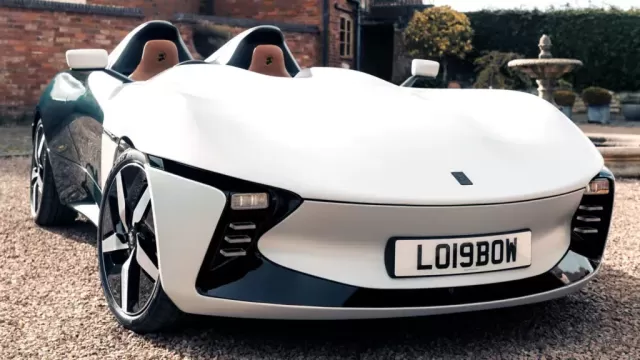
In the realm of high-performance automobiles, a timeless adage often invoked is "Simplify, then add lightness." This philosophy, famously associated with Lotus founder Colin Chapman, heralded an era of dominant, agile racing machines. While the inherent simplicity of an electric vehicle (EV) powertrain—devoid of complex transmissions and fuel systems—would likely appeal to Chapman's minimalist sensibilities, the challenge of mitigating battery weight presents a significant hurdle for achieving true lightness.
This very challenge is being tackled by Longbow cofounders Daniel Davey and Mark Tapscott. Both seasoned veterans from leading EV innovators like Tesla and Lucid, they've witnessed firsthand the intricacies of electric vehicle development. Driven by a shared admiration for lightweight, nimble sports cars and armed with hard-won insights, they've joined forces with Swedish tech investor Jenny Keisu, formerly the CEO of electric boat maker X Shore. Their mission: to craft an electric sports car that embodies Chapman's spirit – the Longbow Speedster.
The Quest for Lightness in Electrification
When stacked against contemporary electric rivals like the MG Cyberster, Longbow's obsession with weight savings becomes even more pronounced. The all-wheel-drive Cyberster Legend, a vehicle weighing 4,872 pounds with 536 horsepower, reaches 60 mph in 3.1 seconds. Its rear-wheel-drive sibling, the Cyberster Trophy, at 4,651 pounds with 335 horsepower, clocks in at 4.9 seconds. The Speedster's ability to approach, and even surpass, some of these figures with significantly less power and weight underscores its efficiency.
Projected to offer a WLTP-rated range of 275 miles, the Longbow Speedster is anticipated to feature a 55-kWh battery pack. Notably, this battery is designed for a low profile, ensuring the Speedster maintains a traditional sports car seating position, avoiding the sensation of riding "on" rather than "in" the vehicle, a common criticism of some bulkier EVs.
Design and Engineering Ingenuity
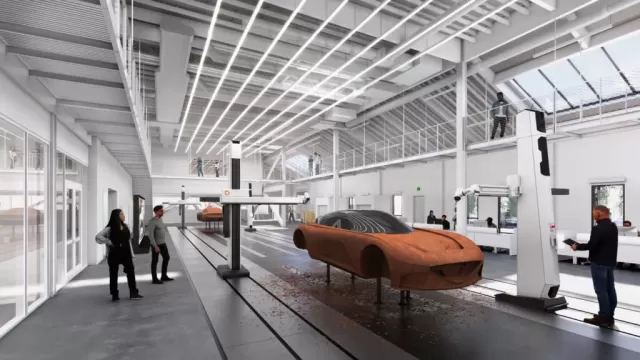
While the interior remains a work in progress, the Speedster's journey from digital concept to drivable prototype in just six months highlights an unconventional development methodology. Longbow has focused its internal efforts on exterior design, strategically outsourcing nearly all hardware components. This includes the e-motor, inverter, power electronics, braking systems, and lighting. The car's robust extruded aluminum chassis, featuring multi-link suspension at both front and rear, is derived from the modular Passenger and Commercial EV Skateboard (PACES) platform developed by the British-based Watt Electric Vehicle Company.
A New Paradigm for EV Production
This approach resonates with Colin Chapman's own practices; Lotus consistently sourced its internal combustion engines from external manufacturers, a tradition that continues today. Similarly, Longbow plans to eventually offer its complete platform and powertrain to other low-volume vehicle producers, echoing how the iconic Lotus 7 chassis was licensed to niche sports car makers like Caterham and Donkervoort.
Aside from battery cells, all Speedster components will be manufactured and sourced within the United Kingdom. Tapscott emphasizes the UK's unparalleled ecosystem for sports car creation, citing its rich Formula 1 heritage, deep pool of engineering talent, and robust supply chain. Industry reports suggest potential production could occur at a new factory near Coventry, being built by Watt Electric Vehicle Company specifically for PACES-platformed vehicles on a white-label basis.
Driving Towards the Future: Availability and Beyond
However, U.S. enthusiasts will have the opportunity to acquire Longbow's follow-up model: the Longbow Roadster. Essentially a Speedster variant featuring a windshield and a convertible roof, the Roadster is expected to launch in 2027. Longbow projects an initial production volume of 2,000 Roadsters annually. Slightly heavier than the Speedster at 2,193 pounds—still remarkably light, barely 120 pounds more than the original NA-series Miata—it will be marginally slower to 60 mph. Renderings suggest the Roadster, with its added upper bodywork, might present an even more aesthetically refined profile. Priced from around $85,000 equivalent, the Longbow Roadster aims to carve out its niche, potentially arriving before other long-promised electric sports coupes.