Bessent Criticizes Powell's Potential Supreme Court Appearance
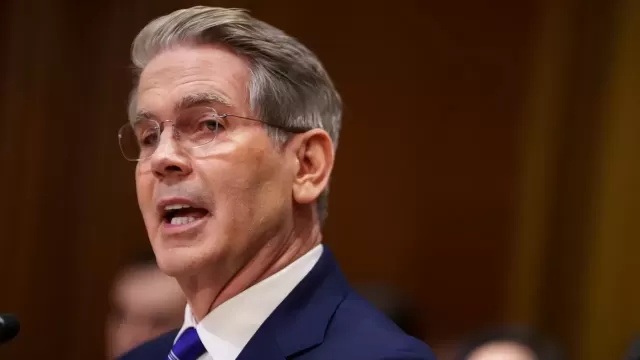
The ongoing friction between the U.S. Treasury and the Federal Reserve reached a new peak this week as Treasury Secretary Scott Bessent publicly questioned the judgment of Fed Chair Jerome Powell. The disagreement centers on Powell's reported decision to attend upcoming Supreme Court oral arguments, a move that critics suggest could blur the lines between independent monetary policy and judicial proceedings.
Concerns Over Political Impartiality
Speaking from the World Economic Forum in Davos, Bessent argued that the Chair's presence in the courtroom would be counterproductive to the Federal Reserve's mission of remaining non-partisan. According to the Treasury Secretary, appearing at a high-stakes legal battle involving the executive branch's authority could be perceived as an attempt to influence the court's decision. The central concern is that such visibility might damage the public's perception of the central bank as an entity shielded from political maneuvering.
The legal case in question involves the administration's efforts to remove Lisa Cook from the Fed's Board of Governors. While the executive branch cited allegations related to past financial conduct as the basis for her dismissal, Cook remains active in her role as the judicial system reviews the legitimacy of the removal.
The Struggle for Central Bank Independence
The tension between the White House and the Federal Reserve is not a new phenomenon, but it has intensified as the administration seeks more direct control over the institution's leadership. The battle over Cook's seat is viewed by many economists as a litmus test for the president's power to fire central bank officials—a power that has historically been strictly limited to ensure economic stability.
Key points of contention in this escalating standoff include:
- The executive branch's authority to dismiss board members for "cause" versus policy disagreements.
- The impact of leadership turnover on global market confidence and inflation management.
- The precedent set by allowing direct political interference in the central bank's internal governance.
Legal Challenges and Pretextual Investigations
Adding another layer of complexity to the situation is Jerome Powell's recent disclosure that he is the subject of a criminal investigation. In a rare public address, Powell dismissed the inquiry as a strategic distraction rather than a legitimate legal pursuit. He asserted that the investigation, which purportedly involves the oversight of building renovations and previous congressional testimony, is being used as a pretext to undermine his leadership.
Powell maintains that the Federal Reserve has been transparent with its disclosures and that the current legal pressure is an extension of the administration's long-standing effort to replace him. As the Supreme Court prepares to hear arguments regarding the removal of governors, the outcome will likely define the boundaries of executive power and the future of the Federal Reserve's autonomy for years to come.